ماكينة فصل الألواح بالليزر LD-4 من Youngpool Technology: حل دقيق ومنخفض الإجهاد لفصل الألواح الرقيقة وخفيفة الوزن PCB
Aug 30, 2026مع استمرار تطور المنتجات الإلكترونية نحو تصميمات أنحف وأصغر حجماً وأكثر تكاملاً، أصبحت لوحات الدوائر المطبوعة (PCBs) أكثر دقة وخفة وزناً. ويستمر انخفاض سمك لوحات الدوائر المطبوعة، خاصةً في تصنيع الإلكترونيات الاستهلاكية ومعدات الاتصالات ومختلف المنتجات الإلكترونية عالية الكثافة، حيث يصل سمك بعضها إلى أقل من 0.8 مم. وبالمقارنة مع اللوحات التقليدية، تتميز لوحات الدوائر المطبوعة الرقيقة والخفيفة عموماً بقوة ميكانيكية أقل، مما يفرض متطلبات أعلى على التحكم في إجهاد التصنيع ودقة التشغيل أثناء عمليات المعالجة اللاحقة. وقد أصبح فصل لوحات الدوائر المطبوعة بكفاءة مع التحكم الأمثل في تأثير إجهاد التصنيع هاجساً مهماً لمصنعي الإلكترونيات.
تواجه أساليب فصل الألواح التقليدية متطلبات عملية جديدة
بعد اكتمال عمليات التجميع السطحي (SMT) واللحام وغيرها، يلزم فصل لوحات الدوائر المطبوعة (PCB) عن اللوحة الأم. حاليًا، لا تزال عمليات الفصل اليدوي وفصل اللوحات باستخدام جهاز التوجيه (الراوتر) مستخدمة في العديد من سيناريوهات الإنتاج. مع ذلك، ومع ازدياد تعقيد هياكل لوحات الدوائر المطبوعة وتزايد متطلبات الدقة في المنتجات الإلكترونية، تواجه طرق الفصل التقليدية تحديات جديدة.
على سبيل المثال، عند فصل لوحات الدوائر المطبوعة يدويًا، يقوم المشغلون بتطبيق قوة خارجية لفصلها عند نقاط التوصيل. قد يصعب الحفاظ على مستوى ثابت من الإجهاد الميكانيكي المتولد أثناء هذه العملية. بالنسبة للوحات الدوائر المطبوعة الرقيقة أو تلك الحساسة للإجهاد الميكانيكي، قد يزيد ذلك من خطر تشوه اللوحة أو إجهاد وصلات اللحام. في الوقت نفسه، يعتمد التشغيل اليدوي إلى حد ما على خبرة المشغل، مما يجعل ضمان جودة فصل اللوحات عاملاً إضافيًا يجب مراعاته في الإنتاج الضخم.
تعتمد عملية فصل لوحات الدوائر المطبوعة الميكانيكية التقليدية بشكل أساسي على الشفرات وريش التوجيه وغيرها من الأدوات الميكانيكية. ورغم أن هذه الطرق قد تلبي متطلبات فصل لوحات بعض المنتجات، إلا أن المعالجة الميكانيكية تنطوي بطبيعتها على قوى تلامس، بالإضافة إلى عوامل أخرى مثل تآكل الأدوات وقيود مسار التشغيل. ومع ازدياد رقة لوحات الدوائر المطبوعة وتزايد صغر حجم تصميمات المكونات، لم يعد تركيز المصنّعين مقتصراً على"إتمام عملية إزالة الألواح."بدلاً من ذلك، يتم إيلاء اهتمام أكبر لدقة فصل الألواح، وإجهاد المعالجة، وقابلية العملية للتكيف.
في ظل هذه الظروف الصناعية، تم إدخال تقنية المعالجة بالليزر غير التلامسية تدريجياً في تطبيقات فصل لوحات الدوائر المطبوعة. وباستخدام شعاع الليزر لمعالجة المواد، يمكن تقليل القوى الميكانيكية المرتبطة بالتلامس المباشر بين أدوات القطع التقليدية ولوحات الدوائر المطبوعة، مما يوفر خياراً جديداً لعملية فصل لوحات الدوائر المطبوعة الرقيقة ولوحات الدوائر المطبوعة الدقيقة.
حلول يونغبول تكنولوجي الذكية لإزالة الألواح بالليزر بدون تلامس
استجابةً للطلب المتزايد على عمليات فصل الألواح الدقيقة في صناعة تصنيع الإلكترونيات، طورت شركة يونغبول تكنولوجي بشكل مستقل آلة فصل الألواح بالليزر LD-4، والتي توفر حلاً عالي السرعة ومنخفض الإجهاد ومرنًا للمعالجة لـلوحة الدوائر المطبوعةوفصل لوحات الدوائر المطبوعة.
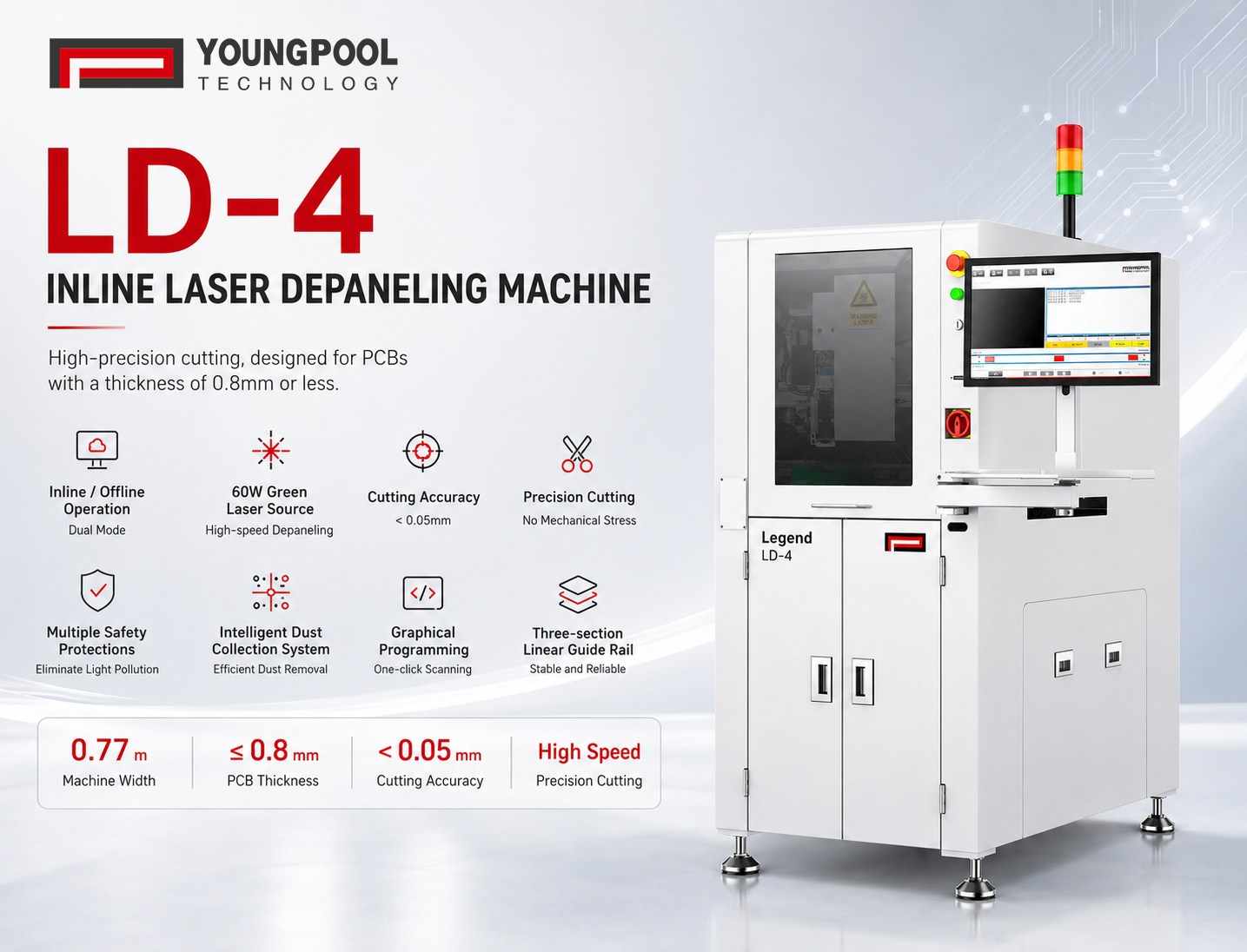
تعتمد آلة فصل لوحات الدوائر المطبوعة بالليزر LD-4 على طريقة معالجة ليزرية لا تلامسية. وهي مزودة بشكل قياسي بليزر نانوثانية أخضر بقوة 60 واط وتقنية مسح جلفانومترية، مما يحقق دقة قطع أقل من 0.05 مم. أثناء المعالجة، يعمل الليزر مباشرةً على منطقة المادة المحددة دون الحاجة إلى أدوات ميكانيكية لتطبيق قوة خارجية للفصل، مما يقلل من تأثير الإجهاد الميكانيكي على لوحات الدوائر المطبوعة أثناء عملية الفصل. بالنسبة لمنتجات لوحات الدوائر المطبوعة الرقيقة والمعقدة هيكليًا، توفر طريقة المعالجة هذه حلاً أكثر دقة لفصل اللوحات.
بالإضافة إلى ليزر النانو ثانية الأخضر القياسي بقدرة 60 واط، يمكن تجهيز جهاز LD-4 اختيارياً بليزر نانو ثانية فوق بنفسجي بقدرة 30 واط، مما يسمح للمصنعين باختيار التكوين المناسب بناءً على مواد لوحات الدوائر المطبوعة المختلفة ومتطلبات المعالجة الفعلية. يدعم الجهاز حجم منتج أقصى يبلغ 270 مم.×يبلغ طولها 300 مم، بما في ذلك التركيبات، وبحد أقصى لسمك المنتج يبلغ 1.2 مم، مما يتيح لها استيعاب متطلبات معالجة المنتجات ذات المواصفات المختلفة.
القيمة التطبيقية لآلة إزالة الألواح بالليزر LD-4 من شركة يونغبول تكنولوجي
إن قدرة آلة إزالة الألواح على خدمة الإنتاج الفعلي بفعالية لا تعتمد فقط على قدرتها على المعالجة، ولكن أيضاً على مدى قابليتها للتكيف مع أنماط الإنتاج المختلفة.
تدعم آلة فصل الألواح بالليزر LD-4 نمطي التشغيل المتصل وغير المتصل بالإنترنت. بالنسبة لخطوط الإنتاج عالية الأتمتة، يمكن دمج الجهاز في خط الإنتاج وفقًا لتخطيطه. أما بالنسبة للتطبيقات التي تشمل مجموعة واسعة من المنتجات ومتطلبات إنتاج أكثر مرونة، فيمكن تشغيله بشكل مستقل في وضع غير متصل بالإنترنت. يوفر هذا التصميم ثنائي الوضع لمصنعي الإلكترونيات بمختلف أحجامهم وإيقاعات إنتاجهم مرونة أكبر في التطبيقات.
لأغراض تغيير المنتجات وبرمجة المعالجة، يدمج جهاز LD-4 أنظمة الرؤية والليزر والتحكم بالحركة، ويدعم مسح الصور بنقرة واحدة والبرمجة الرسومية. وبالمقارنة مع طرق المعالجة التقليدية التي تتطلب إعدادات معقدة للمعلمات، فإن واجهة المستخدم الرسومية الأكثر سهولة تقلل من صعوبة إعداد البرنامج عند التبديل بين المنتجات، مما يُمكّن الجهاز من التكيف بشكل أفضل مع متطلبات إنتاج لوحات الدوائر المطبوعة ذات المواصفات المتعددة.
وفي الوقت نفسه، ولمعالجة الغبار الذي قد يتولد أثناء المعالجة بالليزر،LD-4آلة إزالة الألواح بالليزرمُجهّز بنظام ذكي لإزالة الغبار ووحدة تجميع غبار عالية الكفاءة للمساعدة في إدارة بيئة المعالجة. كما يشتمل الجهاز على العديد من إجراءات الحماية لتقليل تأثير التعرض للضوء الناتج عن الليزر على بيئة التشغيل في الموقع. يدعم تصميم المحور Z القابل للبرمجة ضبط ارتفاع المعالجة، مما يعزز قابليته للتكيف مع مختلف المنتجات وتكوينات التثبيت.
مع تزايد محدودية مساحة أرضية الإنتاج في مصانع الإلكترونيات، أصبحت أبعاد المعدات عاملاً هاماً في تخطيط الإنتاج. يتميز جهاز LD-4 بعرض إجمالي لا يتجاوز 0.77 متر، ويجمع بين معالجة الليزر، والرؤية، والتحكم في الحركة، وجمع الغبار، مع تقليل المساحة التي يشغلها على خط الإنتاج، مما يوفر مرونة أكبر في تصميم الخط.
مع استمرار تطور لوحات الدوائر المطبوعة نحو تصميمات أرق وأكثر دقة، يجب أن تتطور عمليات فصلها تبعاً لذلك. فمن الفصل اليدوي والميكانيكي إلى المعالجة بالليزر بدون تلامس، تتناسب التقنيات المختلفة مع متطلبات المنتجات المختلفة وسيناريوهات التطبيق المتنوعة.
تكنولوجيا يونغبوليواصل التركيز على متطلبات العمليات العملية لتصنيع الإلكترونيات. تم تصميم ليزر LD-4 حول ليزر نانوثانية أخضر بقوة 60 واط، ومسح جلفانومتر عالي الدقة، ووضعي تشغيل متصل/غير متصل بالإنترنت، ووظائف مساعدة ذكية.آلة إزالة الألواحيوفر خيار عملية جديد لفصل لوحات الدوائر المطبوعة (PCB) ولوحات الدوائر المطبوعة المجمعة (PCBA) بدقة عالية.
تتطلع شركة يونغبول تكنولوجي إلى المستقبل، وستواصل التركيز على احتياجات الأتمتة والتطوير الذكي في صناعة الإلكترونيات. ومن خلال المعدات والحلول المصممة لتلبية متطلبات الإنتاج الواقعية بشكل أفضل، نهدف إلى مساعدة مصنعي الإلكترونيات على تحسين مرونة عمليات التصنيع وتبسيطها.


 شبكة IPv6 مدعومة